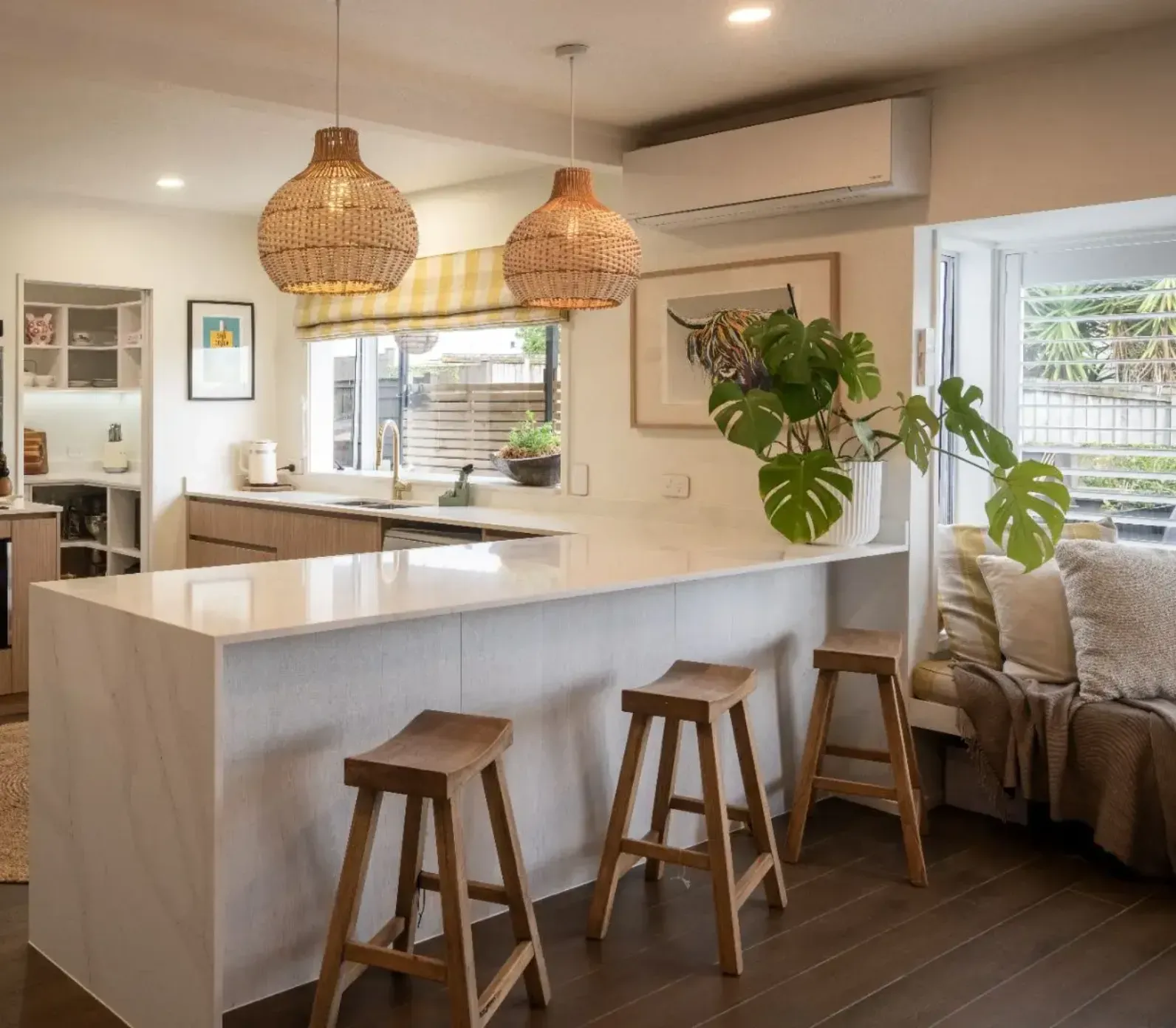
Let's be honest: the word "budget" and "kitchen renovation" don't usually appear in the same sentence without causing a bit of anxiety. But here's the thing; you can absolutely transform your kitchen without emptying your savings account or remortgaging the house. It just takes a bit of planning, some smart choices, and knowing where to splurge versus where to save.
I've seen countless Auckland homeowners walk into consultations convinced they need to spend a fortune to get the kitchen they want. More often than not, that's just not true. With over 20 years in this industry, I've learned that a well-planned renovation on a sensible budget can rival those flashy $100K+ projects you see on Instagram.
Start With the Big Picture
Yeah, I know. Pinterest is tempting. But before you fall down that rabbit hole of marble waterfall islands and butler's pantries, grab a coffee and have an honest chat with yourself about what you actually need.
Do you really need that massive island, or would extra storage solve your daily headaches? Is it the layout that's driving you mad, or just those dated cabinet doors? Sometimes the problems we think we have aren't the ones causing us grief day-to-day.
Make a list. A proper one. Write down everything that genuinely bugs you about your current kitchen: not enough bench space, dodgy drawers that stick, poor lighting, whatever. Then rank them. This'll be your roadmap when decisions get tough later on.
Setting Your Actual Budget
Right, time for the slightly uncomfortable bit. You need a real number, not a vague "we'll see how we go" approach. Look at your finances properly and decide what you can actually afford. And here's a tip from someone who's seen plenty of renovations: add 10-15% for unexpected costs. There's always something; a bit of water damage behind the old cabinets, or you fall in love with tapware that's slightly dearer than planned.
In Auckland, kitchen renovations typically fall into these brackets:
$15K-$25K: Gets you quality materials, professional installation, and a kitchen that'll serve you well for years. Think laminate or entry-level stone benchtops, melamine cabinetry with soft-close mechanisms, and standard hardware. Nothing fancy, but nothing shabby either.
$25K-$35K: This is where you start getting those nice-to-haves. Engineered stone benchtops, thermoformed doors, better storage solutions, and more choice in finishes. It's the sweet spot for many Kiwi families.
$35K+: Now we're talking custom everything. Premium materials, advanced storage systems, and basically whatever your heart desires. But you know what? Most people don't need to spend this much to be absolutely stoked with their kitchen.
Where to Save (Without Looking Cheap)
Here's where it gets interesting. Some savings are invisible; others are painfully obvious. Let me explain.
Cabinet boxes: The internal structure doesn't need to be fancy. Quality melamine boxes with solid construction will last just as long as more expensive options. No one's looking inside your cabinets wondering what material they're made from, mate.
Door styles: Flat-panel or simple shaker-style doors cost way less than intricate designs, but they look clean and modern. Sometimes simple is better anyway; less fussy, easier to keep clean, and honestly? They age better than trendy designs.
Handles: You can find gorgeous handles that don't cost the earth. Or go handleless. It's a design choice that actually saves money. Win-win.
Appliances: You don't need top-of-the-line everything. A good mid-range oven will cook your Sunday roast just fine. Save the splurge for one or two appliances you'll use daily, like your cooktop if you're a serious cook.
DIY the demo: If you're handy, removing the old kitchen yourself can save a chunk of change. Just don't touch anything involving plumbing, electrical, or structural work. Leave that to the professionals unless you fancy explaining to your insurance company why you thought you could move that load-bearing wall yourself.
Some things are worth the extra dollars
Skimping here will bite you later.
Benchtops: This is your work surface. You'll use it every single day, multiple times. Engineered stone or decent porcelain will handle Auckland's hard water, wine spills, and whatever else life throws at it. Cheap laminate might save money now, but you'll be cursing it in five years when it's bubbling and peeling.
Hardware: Blum soft-close mechanisms aren't just fancy. They'll outlast you. Cheap hinges and drawer runners fail within a couple of years, then you're paying a tradie to come back and replace them all. False economy, that.
Installation: Cowboys exist in every industry, and kitchen fitting is no exception. A good installer makes everything work perfectly; level benchtops, doors that align properly, and no gaps where there shouldn't be. A dodgy one? You'll notice every single day, and fixing their mistakes costs more than hiring someone decent in the first place.
Layout planning: If your current layout doesn't work, throwing new cabinets into the same dysfunctional arrangement won't fix it. Sometimes spending a bit more to move plumbing or electrical to create a better workflow is worth every cent.
Function Over Flash
You know what's interesting? The most expensive kitchens aren't always the most functional. I've worked on $70K kitchens where people couldn't actually cook efficiently because the layout was rubbish.
Think about your work triangle: sink, stove, fridge. Keep them relatively close but not cramped. Consider where you prep food, where you cook, where you serve. It sounds obvious, but you'd be surprised how many people don't think this through properly.
Storage is another thing. It's not just about quantity; it's about accessibility. Deep corner cabinets look great but become black holes where Tupperware lids go to die. Lazy Susans or pull-out systems cost a bit more but actually let you use that space. Sometimes paying for better storage solutions means you can get away with fewer cabinets overall.
Timeline: Patience Pays
Rushing costs money. When you're under time pressure, you make quick decisions that aren't always the smart ones. You settle for what's available now rather than waiting for a sale or finding the perfect piece at mate's rates.
Give yourself at least three months from starting to plan until installation. That includes:
- 2-3 weeks for design and planning (don't rush this)
- 2-3 weeks for manufacturing
- 1-2 weeks for installation
- Buffer time for inevitable delays
This breathing room means you can shop around for the best prices, wait for sales, and make considered decisions.
Getting Multiple Quotes
Yeah, definitely get multiple quotes. But here's what most people miss: the cheapest option rarely delivers the best value.
Look at what's actually included. Are they using quality materials or cheaper substitutes? What's the warranty? How experienced is the installer? A quote that seems expensive might include things like project management, rubbish removal, and painting that the cheaper quote expects you to organise yourself.
Ask questions. Good builders and designers welcome questions; cowboys get defensive. If someone can't clearly explain why they've specified certain materials or methods, that's a red flag.
The Hidden Costs No One Warns You About
Let me save you some stress. Here's what often blindsides people:
- Eating out: Your kitchen will be out of action for a bit. Budget for takeaways and restaurant meals, or set up a temporary kitchen in another room.
- Paint touch-ups: You'll probably need to paint around the new kitchen. Factor that in.
- New lighting: Once your stunning new kitchen is in, your old lighting might look sad and dated. Upgrading it isn't essential, but you might want to.
- Small appliances: Suddenly your old toaster looks rubbish against your beautiful new benchtops. Not essential, but worth considering.
- Fixing stuff behind the old kitchen: Sometimes removing old cabinets reveals damage that needs addressing. It's rare, but it happens.
Working With What You've Got
Not everything needs replacing. Sometimes the best savings come from keeping things that still work well.
Appliances: If your oven's only five years old and works fine, keep it. Design the new kitchen around existing appliances if they're good quality and you like them.
Layout: Moving plumbing and electrical costs serious money. If the current layout works reasonably well, keeping the sink and stove in roughly the same spots can save thousands.
Structural elements: Got a breakfast bar or peninsula? If the structure's sound, maybe just reface it rather than ripping it out completely.
The Power of Good Design
Here's something that surprises people: good design can save you money. A skilled designer can look at your space and find solutions that cost less but work better.
Maybe you don't need as many overhead cabinets as you thought. Perhaps a clever corner solution means you can fit everything in a smaller footprint. Good designers have seen hundreds of kitchens; they know where money's well spent and where it's wasted.
At Next Level Kitchens, we include the design phase because getting it right from the start prevents expensive changes later. That 3D render isn't just pretty; it's a tool to spot problems before we start cutting timber.
Material Choices: The Long Game
When comparing materials, think about lifespan and maintenance, not just upfront cost. That cheap benchtop might save you $2,000 now, but if it needs replacing in seven years while engineered stone would've lasted 20, you're actually spending more overall.
Same with cabinet doors. Thermoformed doors cost more than melamine, but they're more durable and easier to clean. Over 15 years, that difference matters.
Quality hardware, proper soft-close mechanisms, decent drawer systems; these things add up front but prevent frustration and replacement costs down the track. As my old boss used to say, buy cheap, buy twice.
Finishing Touches: When Less Is More
Splashbacks, handles, lighting, accessories; these finishing touches define your kitchen's personality. But they don't all need to be expensive.
A simple glass splashback costs less than fancy tiles and looks clean and modern. LED strip lighting under cabinets isn't expensive but makes a massive difference. Simple handles from a good supplier look just as nice as designer ones at triple the price.
Sometimes the most impressive kitchens are the ones with restrained, cohesive design rather than lots of expensive elements fighting for attention.
The Reality Check
Look, I'll be straight with you. Some kitchens just can't be done properly on a shoestring budget. If you're working with a genuinely tiny budget, it might be worth waiting and saving a bit more rather than compromising on things that'll disappoint you or need replacing quickly.
That said, plenty of Auckland homeowners have gotten beautiful, functional kitchens for $20K-$25K by making smart choices and working with someone who knows how to maximise value. It's about being realistic, prioritising well, and not expecting champagne on a beer budget.
Making It Happen
So where do you start? Book a consultation. A proper one, where someone comes to your place, measures up, asks questions, and really listens to what you need.
At Next Level Kitchens, that consultation's free. We'll talk through your budget honestly, show you what's possible, and create a plan that actually works for your life and wallet. No pressure, no BS, just straight talk about what you can achieve.
Your dream kitchen doesn't have to be a dream. With the right planning, smart choices, and someone experienced to guide you through, you can have a kitchen you'll love for years without breaking the bank.
Ready to Get Started?
Give us a bell on 021 101-2617, or fill in the form on our website. Let's create something great together.