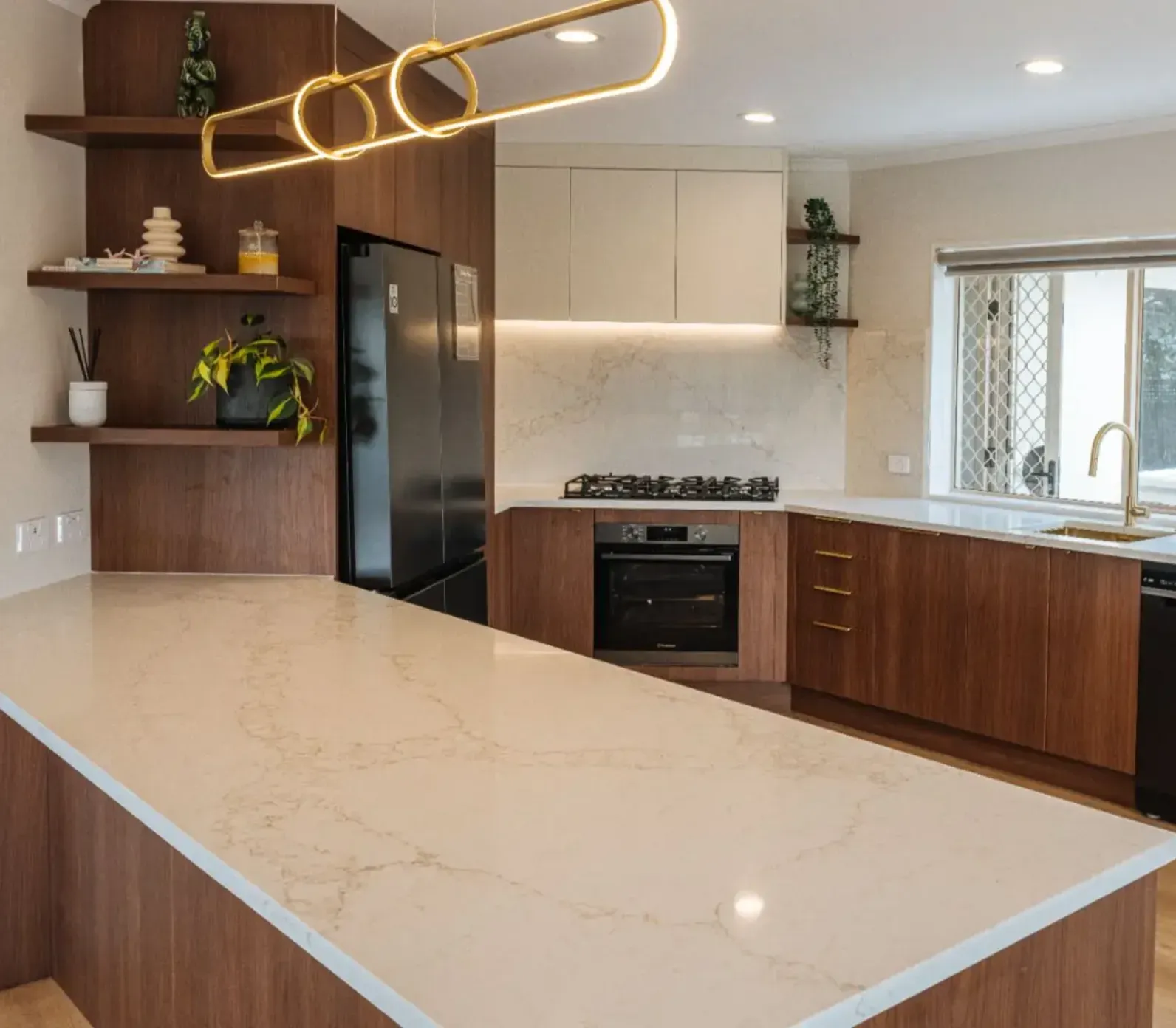
Right, let's talk about what's actually happening in Auckland kitchens this year. Not what some overseas magazine reckons is trendy, but what real Kiwi homeowners are choosing when they sit down with designers like me and start planning their dream spaces.
After two decades in this industry, I've seen trends come and go. Some stick around because they genuinely make life better; others disappear faster than the last Tim Tam in the packet. The interesting thing about 2025? We're seeing a proper shift toward kitchens that work hard but look effortless. Less Instagram showroom, more "I actually cook here and love it."
The Colour Story: Earth Tones Are Having Their Moment
Gone are the days when every kitchen in Auckland was either stark white or charcoal grey. Don't get me wrong; those still work beautifully, but homeowners are getting braver with colour, and honestly? It's about time.
We're seeing loads of warm, earthy tones. Think mushroom, sage green, terracotta, warm greys with brown undertones. These colours feel grounded and natural, which seems to be what people are craving after years of clinical minimalism. They're also way more forgiving than pure white when it comes to Auckland's hard water marks and everyday wear.
Sage green particularly has been huge. Nearly every second consultation I do, someone mentions it. And you know what? It works. Pair it with natural timber and brass hardware, and you've got a kitchen that feels both contemporary and timeless.
Two-tone kitchens are sticking around too, but they're getting more sophisticated. Instead of the stark contrast between white uppers and dark lowers, we're seeing softer combinations: warm white with olive, light oak with deeper walnut, cream with soft sage. The effect is layered and interesting without screaming "I tried too hard."
Benchtops: Veining and Character
The age of plain, uniform benchtops is over. People want character, movement, texture. Engineered stone with dramatic veining is massive right now, and porcelain with marble-look patterns isn't far behind.
Here's what's interesting though: it's not about looking expensive or flashy. It's about having a benchtop that feels like a natural material, with all the organic variation that brings. Think soft, flowing veins rather than bold, contrasting ones. Calacatta and Statuario marble looks are still popular, but we're seeing more subtle, sophisticated interpretations.
Concrete-look finishes are gaining ground too, especially with younger homeowners. They've got that industrial-meets-natural vibe that works brilliantly in Auckland's warehouse conversions and new builds alike. Plus, modern porcelain versions are actually practical, unlike real concrete which can be a nightmare to maintain.
And timber benchtops? They're making a comeback, but with a twist. Instead of the whole benchtop, people are using timber sections strategically: a prep area, a breakfast bar section, or a small butcher's block zone within a stone benchtop. Best of both worlds, really.
Storage Solutions: Hidden Everything
Open shelving had its moment. Now people are remembering that most of us don't have perfectly curated dish collections or the time to keep everything looking Instagram-ready 24/7. The pendulum's swung back toward closed storage, but it's smarter than ever.
Integrated appliances are huge. Fridges that look like cabinetry, dishwashers you can't spot, rangehoods hidden behind panels. The goal is a clean, uninterrupted look where the kitchen feels calm rather than cluttered. Even microwaves are getting tucked away in pull-out drawers or dedicated cabinets.
Pantries are getting serious attention. Not just a cupboard with shelves, but properly designed spaces with pull-out systems, adjustable shelving, and smart organisation. Walk-in pantries are the dream when space allows, but even compact pull-out pantry systems make a massive difference to how a kitchen functions.
Corner solutions have improved dramatically too. Lazy Susans are old news; now we've got magic corner systems and pull-out mechanisms that actually let you access everything without doing yoga poses to reach the back. These cost a bit extra, but clients who spring for them never regret it.
The Handleless Look: Sleek Continues to Dominate
Handleless cabinets aren't exactly new, but they're becoming the default choice rather than the premium option. The technology's improved, prices have come down, and people love how clean and modern they look.
Push-to-open mechanisms work beautifully when done right. The key is quality hardware; cheap systems get annoying quickly, but good ones like Blum's TIP-ON are smooth and reliable. We install them on probably 60% of our kitchens now.
J-pull handles are another option that's trending. They're technically not handleless, but the effect is similar: clean lines, no protruding hardware, easy to clean. They work particularly well on drawers and feel satisfying to use.
That said, handles aren't dead. When people do choose them, they're going for substantial pieces: chunky brass rails, oversized pulls in matte black, or sleek stainless steel options. It's about making a deliberate statement rather than just picking whatever's cheapest at Bunnings.
Smart Kitchens: Technology That Actually Helps
Smart home technology in kitchens is finally getting practical. Not just gimmicky gadgets, but genuinely useful stuff that makes daily life easier.
Under-cabinet lighting with motion sensors is standard now. Walk into your kitchen at night, and it lights up automatically. Simple, but brilliant. We're also seeing more LED strip lighting with dimmer controls, so you can adjust the ambience depending on whether you're prepping dinner or having a wine with mates.
Charging stations built into drawers or cupboards are increasingly common. Your devices charge out of sight, and benchtops stay clear. USB ports integrated into powerpoints are another small change that makes a big difference.
Induction cooktops are becoming the norm rather than the exception. They're safer, more efficient, easier to clean, and frankly, they just work better. Extraction systems are getting smarter too, with auto-sensing fans that adjust based on cooking activity.
Voice-controlled lighting and music systems are popular with tech-savvy clients, though I reckon we're still a few years away from these being standard. The technology's there, but not everyone wants to talk to their kitchen.
Sustainability: It's Not Just Marketing Anymore
Auckland homeowners are thinking seriously about sustainability, and their kitchen choices reflect that. This isn't greenwashing; people genuinely want to make better environmental choices.
Locally made cabinetry is a big one. Choosing NZ-made products over imports reduces shipping emissions and supports local businesses. At Next Level Kitchens, all our cabinetry is manufactured right here, which resonates with clients who care about where their money goes.
Durable materials that won't need replacing in five years are another priority. Quality engineered stone, solid timber, and long-lasting hardware might cost more upfront, but they're the sustainable choice compared to cheap materials that end up in landfill.
Water-efficient taps and appliances are standard now. Energy-efficient appliances too; everyone wants a good energy star rating. LED lighting throughout is basically non-negotiable, both for efficiency and longevity.
Recycled materials are gaining traction as well. Benchtops made from recycled glass or plastic, reclaimed timber features, and eco-friendly finishes. The options are improving every year, and the aesthetic is spot on.
Islands: Bigger, More Functional, More Central
Kitchen islands have evolved from nice-to-have luxury items to the absolute heart of the home. They're getting bigger, more functional, and more carefully considered.
The trend is toward multi-level islands. A raised section for casual dining that hides the cooking mess, a lower section for prep work. This creates natural zones and makes the space work harder. It's practical, especially in open-plan homes where the kitchen opens to living areas.
Integrated sinks in islands are increasingly popular. Having prep sink on the island while keeping the main sink on the perimeter wall creates better workflow. Two people can work comfortably without getting in each other's way; brilliant for couples who both enjoy cooking.
Storage in islands is getting more sophisticated too. Deep drawers for pots and pans, wine fridges, pull-out bins, even microwave drawers. Islands are becoming the hardest-working element in the kitchen.
Seating is another consideration. People want proper breakfast bar overhangs where you can actually sit comfortably, not perch awkwardly on a stool with your knees hitting cabinetry. This requires planning, but it's worth it for creating a space where family and friends naturally gather.
Splashbacks: Statement Pieces
The splashback is having a moment as the feature element in kitchens. Rather than just protecting the wall, it's becoming a focal point.
Full-height splashbacks behind cooktops are hugely popular. They protect more wall area and create visual impact. We're seeing gorgeous natural stone, dramatic porcelain, and even metallic finishes.
Glass remains a favourite because it's practical and versatile. But instead of plain white or mirrored glass, people are choosing tinted options: smoky grey, soft green, or even custom colours that complement their cabinetry. The effect is subtle but pulls the whole design together.
Tiles are back, but not your nana's subway tiles. Large-format tiles in interesting shapes, textured surfaces, and unexpected patterns are trending. Zellige tiles with their handmade, irregular finish add character and warmth.
Some clients are going for slab splashbacks in the same material as their benchtops, creating a seamless look. It's more expensive, but the visual impact is stunning.
Flooring: Warm and Natural
The shift toward warmth and natural materials extends to flooring choices. Timber-look options dominate, whether that's actual timber, engineered timber, or high-quality vinyl planks.
Wide planks are in. They make spaces feel larger and more contemporary. Light to mid-tone timber finishes are most popular; dark floors seem to be on their way out, partly because they show every speck of dust and partly because the aesthetic is dated now.
Hybrid flooring is gaining ground quickly. It's waterproof, durable, looks great, and costs less than timber. For kitchens, where spills are inevitable, it makes a lot of sense. The quality has improved dramatically in recent years.
Polished concrete still has its fans, especially in industrial-style homes or modern new builds. It's practical, durable, and looks the part. Just be aware it can be cold underfoot in Auckland's winter months.
Lighting: Layered and Intentional
Kitchen lighting has become far more sophisticated. Gone are the days of a single ceiling light trying to do everything. Now it's about layering different types of lighting for both function and atmosphere.
Pendant lights over islands are still going strong, but they're getting more interesting. Oversized single pendants, clusters of smaller lights, or linear fixtures that span the island's length. The style varies, but the principle is the same: good task lighting that also looks stunning.
Under-cabinet lighting is basically standard now. It illuminates work surfaces properly and creates a beautiful ambient glow in the evening. LED strip lighting is most common, but we're also seeing puck lights and linear fixtures.
In-cabinet lighting is the next level. LED strips inside glass-fronted cabinets or open shelving highlight beautiful crockery and create depth. It's a luxury touch that doesn't cost the earth.
Natural light remains the priority. Where possible, people are maximising windows, adding skylights, or using glass doors to flood kitchens with daylight. Auckland's beautiful light is free; might as well make the most of it.
The Butler's Pantry Phenomenon
Here's a trend that's absolutely exploded: butler's pantries or sculleries. If you've got the space, everyone wants one.
The concept is simple: a secondary prep and storage area tucked behind or beside the main kitchen where you can hide mess, store small appliances, and do actual food prep without cluttering your beautiful main kitchen. It's genius for anyone who entertains.
These spaces don't need to be fancy. Basic cabinetry, a benchtop, a sink, some powerpoints, and decent storage does the job. The main kitchen stays pristine while the real work happens behind the scenes.
Even in smaller homes, we're finding creative ways to incorporate mini sculleries or appliance garages. A full butler's pantry might not fit, but a deep cupboard with sliding doors that hides the toaster and kettle? That's achievable and makes a real difference.
Mixing Materials: Curated Contrast
The days of everything matching perfectly are over. Now it's about thoughtfully mixing materials to create depth and interest.
Combining timber and stone, matte and gloss, light and dark. The trick is doing it intentionally rather than randomly. Usually, this means picking two or three primary materials and sticking with them throughout the design.
For example: light oak cabinetry with white stone benchtops and matte black hardware. Or sage green doors with brass hardware and timber shelving. The combinations feel curated and considered rather than matchy-matchy.
Texture is just as important as colour. Smooth stone against grainy timber, glossy splashbacks against matte cabinetry. These contrasts make spaces feel more sophisticated and lived-in.
What's Fading Out
It's worth mentioning what's becoming less popular too. All-white kitchens, while still safe and sellable, feel a bit builder-grade now. Everyone's adding at least some warmth or colour.
High-gloss finishes are declining. They show fingerprints, scratches, and look dated quickly. Matte and satin finishes are taking over; they're more practical and have better longevity.
Small, busy tiles are out. Large-format tiles and slabs are in. The fewer grout lines, the better.
Chrome hardware is disappearing fast. Matte black, brushed brass, gunmetal, and stainless steel are the current favourites. Chrome just feels too cold and clinical for the warmer, more organic aesthetic that's dominating.
Making Trends Work for You
Here's the thing about trends: they're interesting to know about, but they shouldn't dictate your choices. Your kitchen needs to work for your life, your cooking style, your family. Trendy but impractical doesn't make sense.
That said, some trends happen because they're genuinely good ideas that improve how kitchens function. Hidden storage isn't trendy for no reason; it's trendy because it makes kitchens more pleasant to use. Same with induction cooktops, layered lighting, and smart storage solutions.
When we work with clients at Next Level Kitchens, we talk through current trends but always bring it back to their specific needs. Maybe you love sage green, but it won't suit your home's architecture. Perhaps you want a massive island, but your space would function better with a different layout. Good design balances what's current with what's practical for your situation.
The Auckland Context
It's worth noting that Auckland has its own flavour when it comes to kitchen design. We're influenced by international trends, sure, but we adapt them to our lifestyle and climate.
Indoor-outdoor flow matters here. Kitchens that open seamlessly to outdoor entertaining areas, with servery windows or large stacking doors. That's very Kiwi and very practical for our lifestyle.
We're also practical people. Trends that don't stand up to real use don't last here. Aucklanders want kitchens that look great but also handle family life, Friday night gatherings, and Sunday roast prep without falling apart.
Looking Forward
The trajectory for 2025 and beyond seems clear: kitchens are becoming more personal, more sustainable, and more functional. The cookie-cutter approach is dying. People want spaces that reflect their values and support their lifestyles.
Technology will continue integrating in subtle, useful ways. Sustainability will keep growing as a priority. And the overall aesthetic will likely stay warm and organic rather than cold and minimalist.
If you're planning a kitchen renovation, these trends offer inspiration, but your own needs should always come first. A well-designed kitchen that suits your life will never go out of style, regardless of what's trending.
Want to explore how these trends might work in your home? Give us a call on 021 101-2617. We'll chat through what's possible, what makes sense for your space, and create something you'll love for years to come. No pressure, just honest advice from someone who's been designing Auckland kitchens for over 20 years.
Let's create something beautiful together, mate.
Ready to Explore These Trends in Your Kitchen?
Give us a bell on 021 101-2617, or fill in the form on our website. We'll chat through what's possible, what makes sense for your space, and create something you'll love for years to come.